The Sign of Jonah and the Freedom to Begin Again
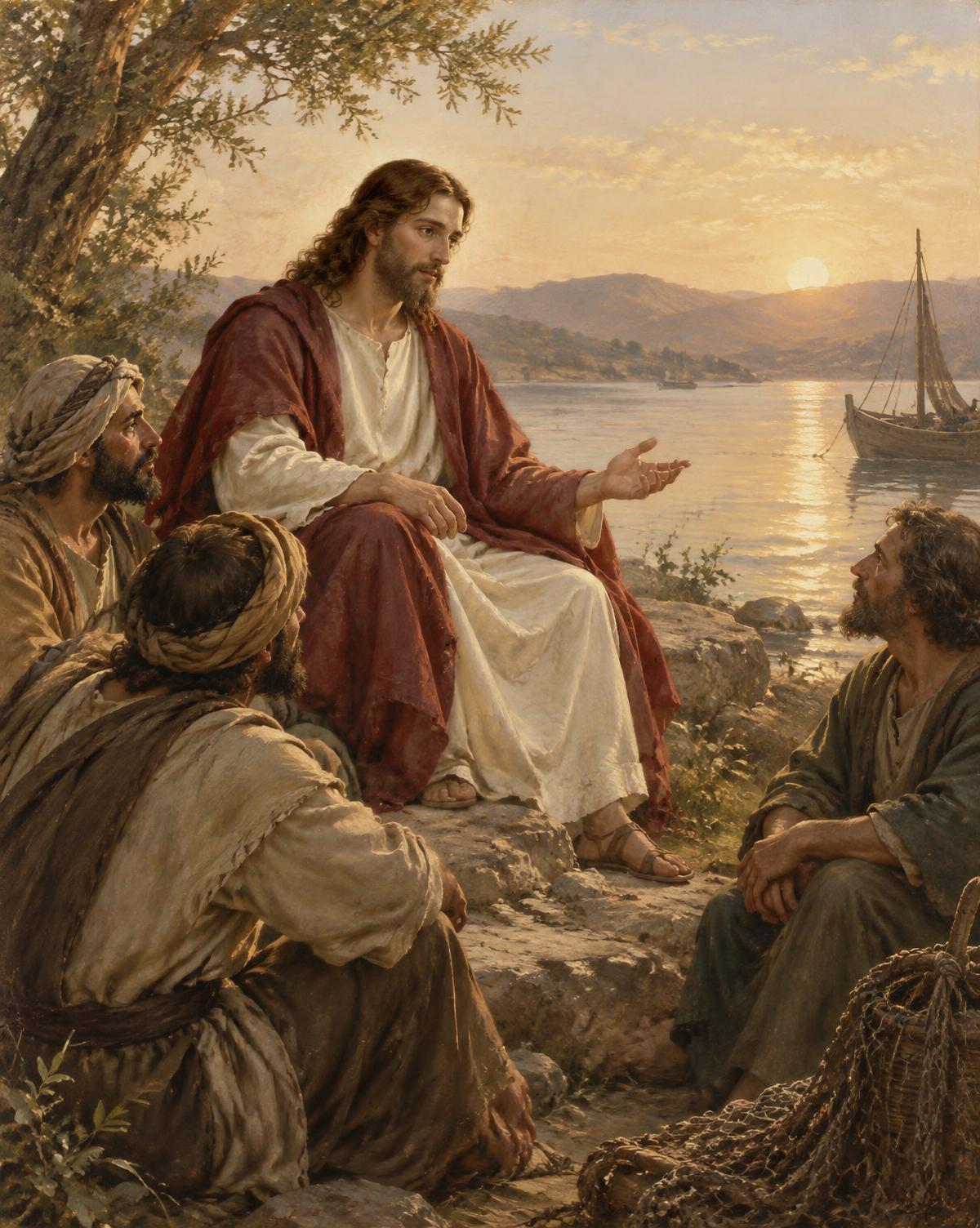
Jesus points to the sign of Jonah not to satisfy curiosity, but to call his hearers to conversion. His word invites us to stop postponing the changes that can begin today.
First Reading: Galatians 4:22-24, 26-27, 31–5:1
Psalm: Psalm 113:1b-2, 3-4, 5a, 6-7
Gospel: Luke 11:29-32
Reflection: The Sign of Jonah and the Freedom to Begin Again
Jesus meets a crowd that wants a sign, yet he does not offer a spectacle on demand. He points instead to Jonah and to the people of Nineveh, who changed their lives when they heard a warning. The sign is not merely something astonishing to witness; it is a word that asks for a response. In Luke’s Gospel, Jesus is greater than Jonah, and his presence makes the call to conversion more immediate, not less. We are invited to ask not only, “What would convince me?” but also, “What am I being asked to change?”
It is natural to want certainty before taking a difficult step. We may hope for a dramatic answer before forgiving someone, seeking help, returning to prayer, or making an honest decision. But the Gospel suggests that the first step need not wait for perfect certainty. The people of Nineveh responded to the message they received. Their example presses gently on our tendency to delay: when conscience has already made a matter clear, another sign may not be what we need. We may need the humility to begin.
Jesus also recalls the Queen of the South, who traveled a great distance to hear Solomon’s wisdom. Her search offers another measure for our own attention. Do we make room to listen for wisdom, or do we give our best attention to noise, hurry, and worry? Jesus is not simply one more voice among many. He calls us to hear him with a readiness that leads beyond admiration to action. A Gospel passage can move us, but its fruit appears in the ordinary choices that follow: a patient answer, a truthful conversation, a repaired relationship, or a quiet refusal to return to a harmful habit.
The first reading, from Galatians, speaks through the story of Hagar and Sarah about slavery and freedom. Paul’s argument points toward a life shaped by God’s promise rather than by bondage. That theme belongs beside today’s Gospel. Conversion is not meant to trap us in shame or make us despair over every failure. It is a movement toward the freedom God desires for us. We may be bound by resentment, fear, a concealed fault, or the belief that we cannot change. Christ’s call asks us to name what holds us and to take a real step toward freedom, with God’s help and, where needed, the support of others.
The psalm turns our attention to God, who is worthy of praise and who lifts up those brought low. This gives hope to anyone who feels too weak to respond. We do not have to manufacture strength before we come to God. We can bring the truth of our situation: the apology we fear to offer, the habit we keep excusing, the prayer we have neglected, or the burden we cannot carry alone. God’s care does not remove our responsibility, but it means we do not face that responsibility alone.
Today, choose one response rather than waiting for a dramatic sign. Set aside a few minutes to read Luke 11:29-32 slowly. Ask where Jesus’ call meets your life, and let the answer be specific. Perhaps it is time to contact someone, confess a fault, ask for counsel, or return to a simple daily prayer. A small, honest act can be the beginning of a changed direction. Jesus is greater than Jonah, and his invitation is present now: listen, turn toward God, and walk in the freedom he offers.
Jesus points to the sign of Jonah not to satisfy curiosity, but to call his hearers to conversion. His word invites us to stop postponing the changes that can begin today.
Prayer for October 12, 2026
Source for the liturgical references: United States Conference of Catholic Bishops.