Reading the Signs—and Making Peace Along the Way
Jesus calls us to notice what is happening in our hearts and to act before a needed reconciliation is delayed. His warning is not meant to frighten us, but to move us toward truth, mercy, and peace.
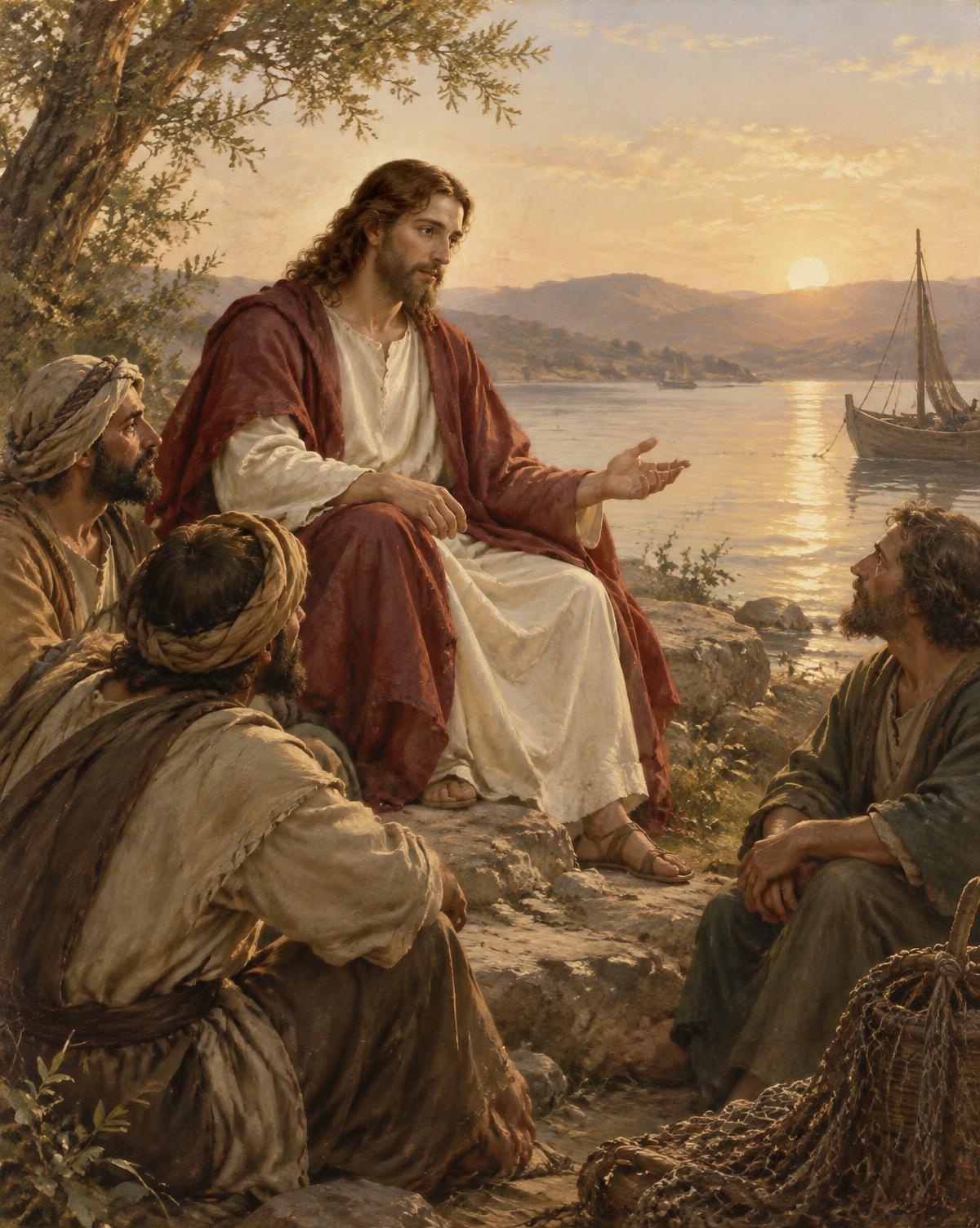
First Reading: Ephesians 4:1-6
Psalm: Psalm 24:1-2, 3-4ab, 5-6
Gospel: Luke 12:54-59
Reflection: Reading the Signs—and Making Peace Along the Way
In Luke 12:54-59, Jesus points to a familiar skill: people can read the appearance of the sky and anticipate the weather. Yet they may overlook what is unfolding in their own lives. His challenge is not an invitation to guess at hidden events or to become anxious about the future. It is a call to pay attention—to recognize when a moment asks for honesty, repentance, or a step toward peace.
That kind of attention can be uncomfortable. We may see that a conversation has grown cold, that we have avoided an apology, or that a resentment is shaping how we treat someone. We may sense that a habit is pulling us away from prayer or from the people entrusted to our care. It is easier to postpone these insights and hope that time will settle everything. Jesus urges his hearers not to wait until a dispute has grown more costly. The way toward peace is available now, while there is still time to take a humble step.
Reconciliation does not mean pretending that hurt did not happen, or that every difficulty can be resolved in one conversation. It begins with a willingness to face the truth without using it as a weapon. Perhaps our first step is to listen without preparing a defense. Perhaps it is to admit our part, ask forgiveness, or seek wise help when a conflict is serious. Sometimes we cannot control another person’s response; we can still choose to pray for that person and refuse to feed bitterness. A small, sincere movement toward peace is not small in the eyes of God.
The first reading, Ephesians 4:1-6, places this daily work within the life of the Church. Paul calls believers to live with humility, patience, and care for one another, preserving the unity they share. Unity is not merely a pleasant feeling or an absence of disagreement. It is a gift we are responsible for tending through the way we speak, forgive, and make room for one another. The psalm, Psalm 24:1-2, 3-4ab, 5-6, widens our view: the earth and all that is in it belong to the Lord. Remembering this can loosen our grip on pride. The person before us is not an obstacle to our comfort, but someone who, like us, stands within God’s world.
Today’s memorial of Saint John of Capistrano offers a further reminder that faith becomes visible in action. The supplied account remembers him as a Franciscan preacher and a soldier of Christ who led a successful defense against the Ottoman Turks through his preaching. His example invites us to consider the influence of our own words. We do not need a public platform to bear witness. A truthful apology, a patient response, or a refusal to pass along a cutting remark can help make the brightness of Christian life visible at home, at work, and in the parish.
Before the day ends, we might ask: What am I noticing but postponing? Is there someone I need to approach, or a matter I should bring honestly before God? We can ask for courage without demanding that the whole path be clear. Then we can take one concrete step: send the message, arrange the conversation, offer a sincere apology, or set aside time to pray for someone with whom we struggle. Jesus’ warning carries hope because it meets us while there is still a way forward. With God’s help, we can read this moment truthfully and choose peace today.
Jesus calls us to notice what is happening in our hearts and to act before a needed reconciliation is delayed. His warning is not meant to frighten us, but to move us toward truth, mercy, and peace.
Prayer for October 23, 2026
Source for the liturgical references: United States Conference of Catholic Bishops.