Blessed by Hearing and Keeping God’s Word
Jesus turns a moment of admiration into an invitation: receive God’s word, then let it shape the way you live. Today’s readings remind us that faith draws us into a family marked by trust, freedom, and shared dignity.
First Reading: Galatians 3:22-29
Psalm: Psalm 105:2-3, 4-5, 6-7
Gospel: Luke 11:27-28
Reflection: Blessed by Hearing and Keeping God’s Word
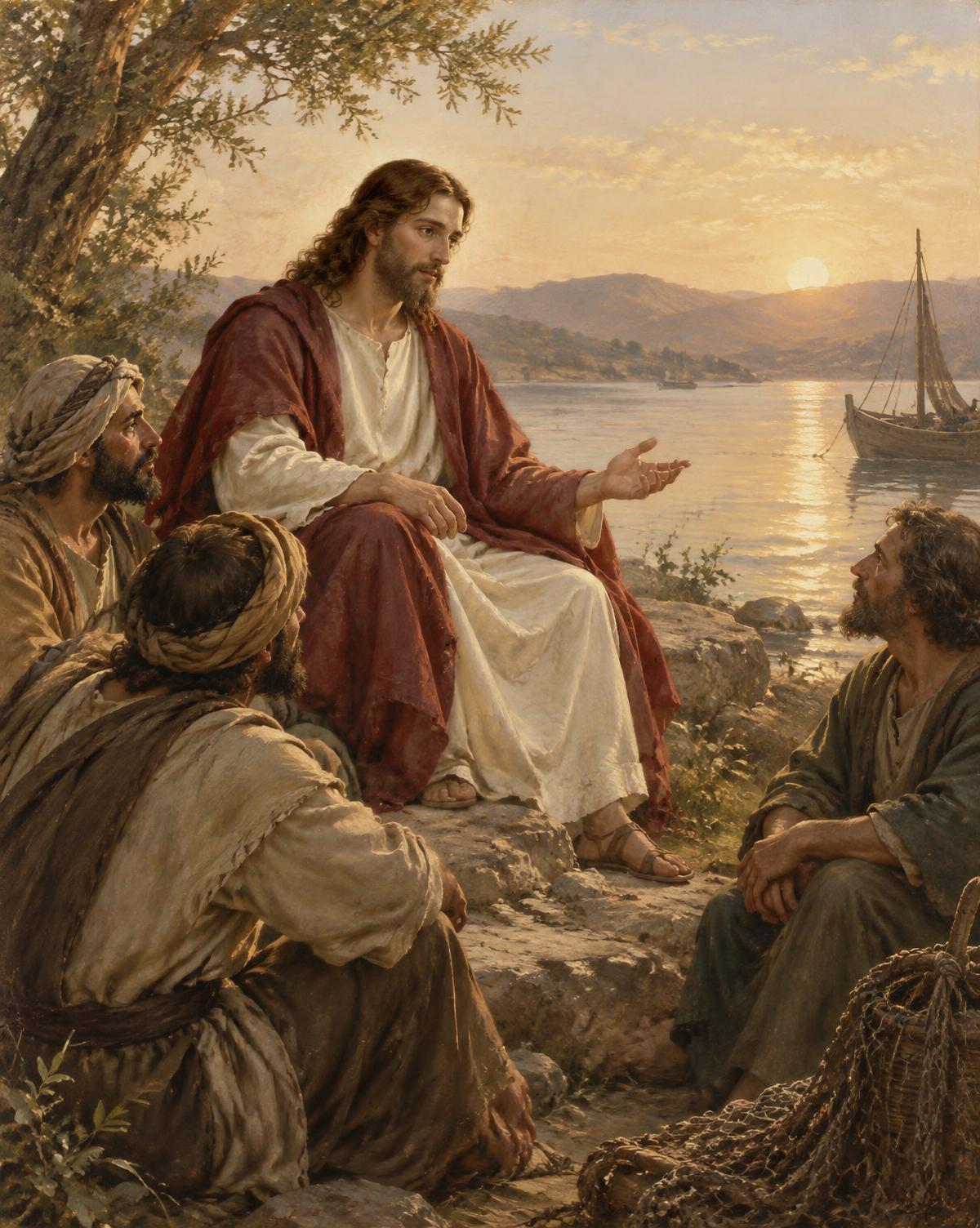
In today’s Gospel, a woman in the crowd calls out a blessing on the mother who bore Jesus. Her words rise from genuine wonder: the person who gave birth to him and cared for him must be blessed indeed. Jesus does not reject her admiration. He gently turns the moment toward a wider invitation: blessed are those who hear God’s word and keep it. The focus shifts from closeness through family relationship to closeness formed by faithful response.
This is not a dismissal of Mary. Rather, Jesus points to the path she herself embodies: receiving God’s word and allowing it to guide her life. The Gospel invites us to consider what it means to hear. We can listen to Scripture, a homily, or a quiet prompting in prayer and still leave unchanged. To keep the word is to carry it into decisions, conversations, habits, and the way we treat the people around us.
That kind of listening is not always dramatic. It may mean pausing before answering in anger, making time for someone who feels overlooked, or choosing honesty when a convenient half-truth would be easier. It may mean returning to prayer after a distracted day, or asking forgiveness instead of defending ourselves. Small acts do not make the Gospel small. They are places where God’s word takes root in ordinary life.
The reading from Galatians deepens this invitation. Paul describes faith in Christ as the way into a new belonging: through baptism, we are clothed with Christ and called children of God. Our standing does not depend on worldly rank or on the distinctions that divide people. In Christ, we are made one. This is a gift, not a prize we earn by being impressive or flawless. Yet a gift changes the life of the one who receives it. Belonging to Christ calls us to treat others as people who share that dignity.
This can challenge us at home, at work, and in the parish. We may find it easier to welcome people who think as we do, understand our routines, or return our kindness. The word of God asks for a wider heart. It asks us to notice who is being left out, to speak with respect when disagreements arise, and to resist measuring another person’s worth by status, background, or usefulness. We do not accomplish this perfectly, but we can ask Christ to make our choices more consistent with the family into which he has drawn us.
The psalm’s call to praise and remember God’s deeds gives this daily effort its foundation. We do not keep the word by relying only on willpower. We remember the One who has been faithful, give thanks, and ask for help again. When we fail, we can return to God without pretending that the failure did not matter. Repentance is itself a way of listening: we allow the truth to reach us, then take the next step toward a more faithful life.
Today, choose one word or teaching of Jesus to carry with you. Let it guide a specific action: a patient reply, a generous welcome, a truthful conversation, or a prayer for someone you find difficult. At the end of the day, ask where you heard God and where you put that word into practice. Do not measure the day only by what you completed. Notice where grace helped you respond with greater love.
Jesus blesses those who hear and keep God’s word. That blessing is not reserved for a distant ideal of holiness. It is offered to us in the ordinary work of receiving, remembering, and responding. By faith, we belong to Christ; by his help, we can let that belonging become visible in the way we live.
Jesus turns a moment of admiration into an invitation: receive God’s word, then let it shape the way you live. Today’s readings remind us that faith draws us into a family marked by trust, freedom, and shared dignity.
Prayer for October 10, 2026
Source for the liturgical references: United States Conference of Catholic Bishops.