Saint Jude Thaddeus
One of the Twelve, named only a handful of times in the Gospels, and today one of the saints Catholics turn to most when hope runs thin.
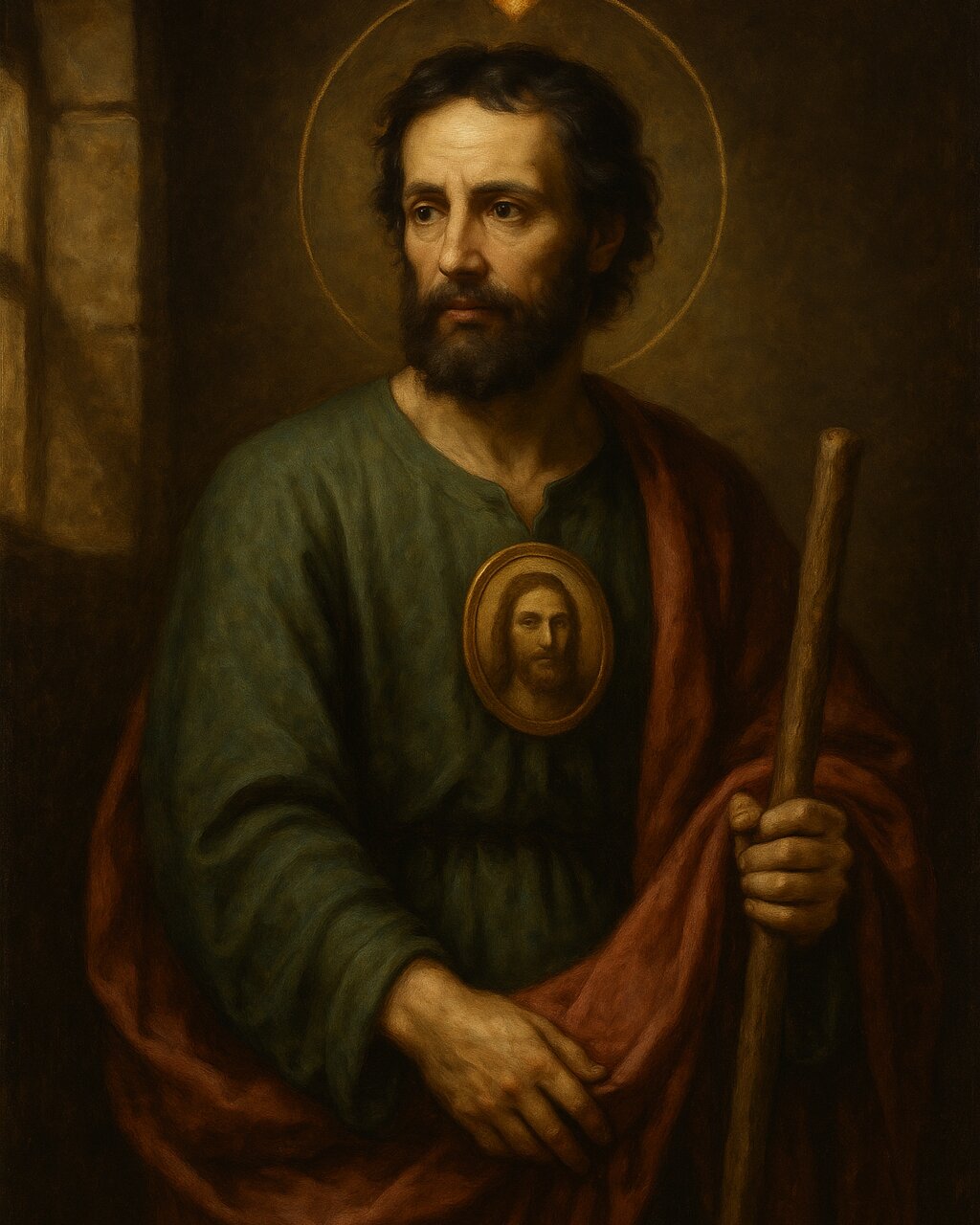
Jude was one of the twelve men Jesus chose to be his apostles. The Gospels tell us very little about him, and most of what is said about his life after Pentecost comes from later tradition. What the New Testament does give us is enough to place him firmly among the Twelve, and to show him asking Jesus one honest question.
The Church celebrates him on October 28 together with another apostle, Saint Simon. The two are named side by side in the lists of the Twelve and have long shared a single feast.
One apostle, two names
The lists of the apostles do not all use the same names. Luke’s Gospel and the Acts of the Apostles include a “Judas of James” (Luke 6:16; Acts 1:13), usually translated “Judas, son of James.” In the matching place, Matthew and Mark name an apostle called Thaddeus (Matthew 10:3; Mark 3:18). The Church’s tradition has understood these as the same man, which is why he is known as Jude Thaddeus.
In English he is usually called Jude, a form of the same name that helps readers tell him apart from Judas Iscariot, the apostle who betrayed the Lord. The Gospel of John makes the same distinction when it mentions him, taking care to say that this Judas is not Iscariot (John 14:22).
His question at the Last Supper
Jude speaks only once in the Gospels. At the Last Supper, after Jesus has promised to reveal himself to those who love him, Jude asks why the Lord will show himself to the disciples and not to the world (John 14:22). Jesus answers that whoever loves him will keep his word, and that he and the Father will come and make their home with that person (John 14:23).
It is a quiet moment, but a telling one. Jude wanted to understand how Christ would be known. The answer he received is the heart of the Christian life: God makes himself known to those who love him, and he chooses to dwell with them.
The Letter of Jude
Among the books of the New Testament is a short letter whose author introduces himself as Jude, a servant of Jesus Christ and the brother of James (Jude 1). Tradition has often attributed it to the apostle, although whether the author is the apostle himself or another Jude, the one counted among the “brothers” of the Lord (Matthew 13:55), has been discussed since early times. The Church receives the letter as inspired Scripture either way.
The letter is brief and urgent. It encourages believers to hold fast to the faith handed down to them, warns against those who would twist it, and asks them to keep themselves in the love of God and to show mercy to those who waver. It closes with a well-known hymn of praise to God, who is able to keep us from falling (Jude 24–25).
Preaching and martyrdom
The New Testament does not tell us where Jude preached after Pentecost or how his life ended. Later traditions, which differ from one another in their details, place his mission in the lands to the east of the Holy Land and honor him as a martyr. His shared feast with Saint Simon reflects an old tradition that joins the two apostles in their preaching and their death. These accounts are part of the Church’s memory of him, but they are not history in the modern sense, and we do not add details to them here.
Patron of desperate causes
Saint Jude is invoked in popular devotion as the patron of desperate and seemingly hopeless causes. This is a devotion, not a fact recorded in Scripture or in ancient sources. A common explanation is that, because his name sounded like that of the betrayer, Christians long neglected to ask his help, so that he became a saint people turned to when every other road seemed closed. Whatever its origin, the devotion has grown wide, and many parishes and shrines hold novenas in his honor.
Asking a saint to pray for us is not a substitute for trusting God, but a way of doing it together with the whole Church. The apostle who asked how Christ would show himself to his friends is a fitting companion for anyone who is waiting for God to act.
Prayer to Saint Jude
Original prayer by Take Jesus Home.